Explore Our Articles
View MoreExplore Our Latest LinkedIn Posts
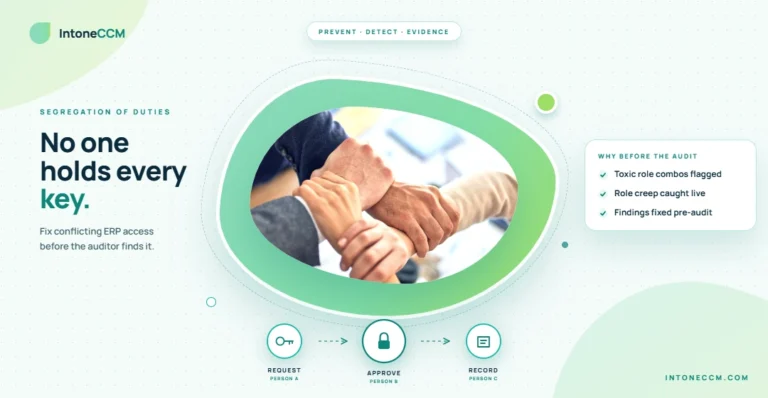
We have seen organizations spend significant effort reviewing user access, only to realize later that a handful of overlooked SoD conflicts were creating most of the risk. …
We have seen organizations spend significant effort reviewing user access, only to realize later that a handful of overlooked SoD conflicts were creating most of the risk.
One common example is unmanaged Segregation of Duties (SoD) conflicts within ERP environments.
The issue isn't that organizations don't know these conflicts exist. The issue is that not all conflicts receive the attention they deserve.
Our latest blog explores how a risk-based SoD approach can help organizations reduce audit findings before they become audit observations.
Read the full article : Segregation of Duties (SoD): Reduce ERP Audit Findings Faster
https://lnkd.in/dJKD8e9c
#InternalAudit #SOXCompliance #SegregationOfDuties #ERP #RiskManagement #Compliance #EagleEye365®
'
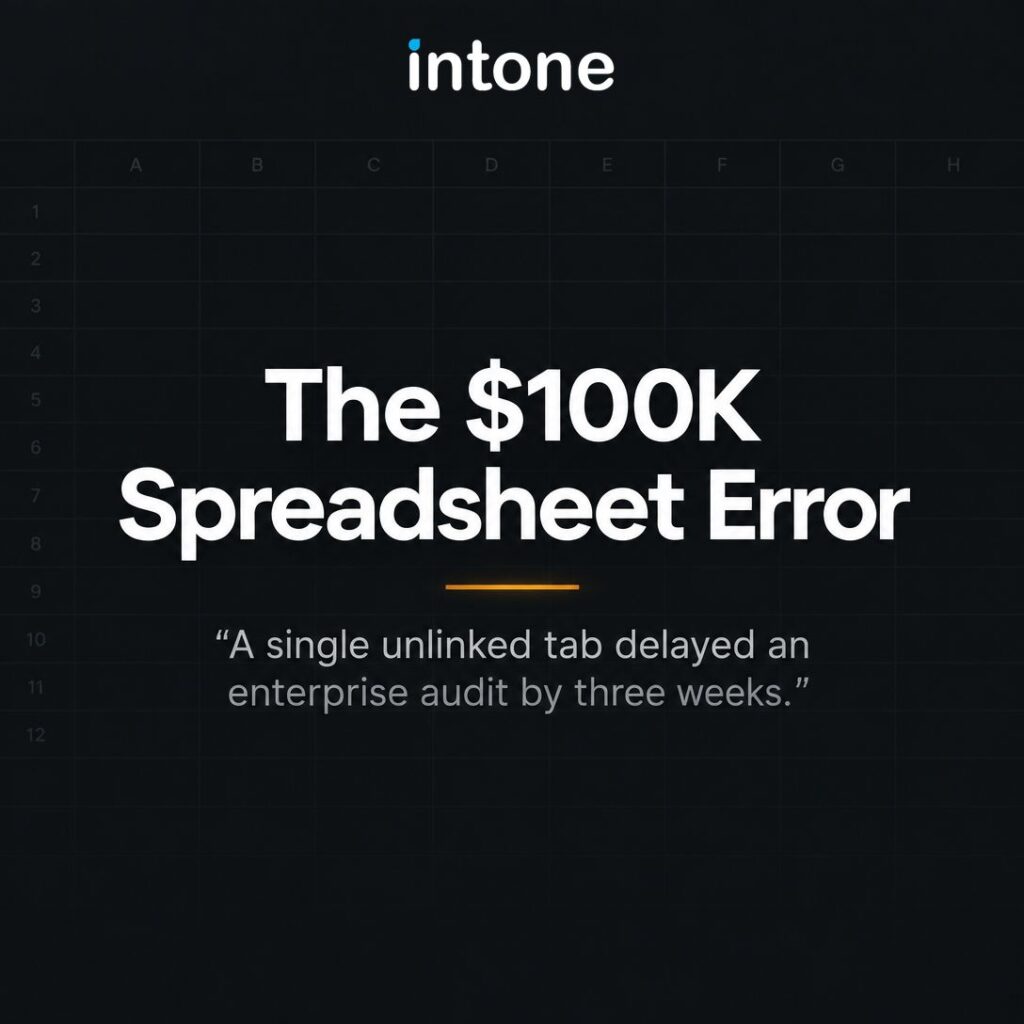
It was supposed to be a routine control check. The finance team had spent nine months and millions of dollars automating their entire financial reporting process. Every core…
It was supposed to be a routine control check.
The finance team had spent nine months and millions of dollars automating their entire financial reporting process. Every core ledger was synced, every validation was automated, and the audit committee was ready to celebrate a flawless quarter.
Then the auditors asked a simple question about an outlier metric on slide 14 of the board deck.
To pull that single number, a senior analyst had quietly copied data into a standalone, unlinked spreadsheet—a temporary workaround created eight months earlier that nobody had decommissioned. Tucked inside an unlinked tab was a broken `=SUM` formula that had miscalculated adjusting journal entries for two full quarters.
In an instant, the "fully automated" narrative evaporated.
What followed was three weeks of pure operational chaos: emergency weekend calls, manual re-testing across thousands of historical entries, six-figure unexpected audit fees, and an executive team forced to explain a preventable internal control failure to the board.
The model didn't fail. The database didn't crash. A single unmanaged, untracked spreadsheet destroyed millions of dollars worth of automation trust.
Automation without centralized data lineage and strict operational controls isn't a modern system—it's just a faster way to scale hidden risk.
Have you ever seen a massive tech transformation project get completely derailed by a single manual workaround or rogue spreadsheet? What happened?
Have an anonymous audit story? Share how your team resolved it below.
#AuditHorrorStories #InternalAudit #DataGovernance #RiskManagement #SOXCompliance
Enterprise IT leaders don't buy features—we buy operational stability, risk mitigation, and seamless integration. When vendors pitch shiny functionality without demonstrating how their platform survives inside our existing…
Enterprise IT leaders don't buy features—we buy operational stability, risk mitigation, and seamless integration.
When vendors pitch shiny functionality without demonstrating how their platform survives inside our existing architecture, compliance frameworks, or security perimeters, they're selling technical debt, not solutions. Feature velocity means nothing if it breaks governance or drains engineering bandwidth on Day 2 operations.
Enterprise IT Realities:
1. Integration Strategy Over Feature Velocity: A solution must fit directly into our identity access management, SIEM, and CI/CD pipelines without custom wrappers or architectural compromises.
2. Governance and Compliance Rigor: Security controls, data residency guarantees, and audit trail capabilities are non-negotiable prerequisites, not enterprise-tier add-ons.
3. Total Cost of Ownership (TCO) Transparency: We calculate cost by long-term maintenance, internal training overhead, and support complexity—not just initial license fees.
4. Vendor Ecosystem Longevity: We evaluate partner stability, roadmap transparency, and dedicated support structures to ensure alignment over a multi-year horizon.
5. Operational Maintainability: Outages and integration failures fall on internal teams; platforms must offer clear telemetry, reliable APIs, and predictable update cycles.
What would you add as #6 from your own experience in the trenches?
Swipe through to read all 5 insights.
#CIO #TechLeadership #EnterpriseSoftware #VendorManagement #ITStrategy

Eight months after a flawless pilot, a major retail client’s predictive inventory engine sat completely dormant. The AI model itself achieved 94% forecasting accuracy in testing, but store…
Eight months after a flawless pilot, a major retail client’s predictive inventory engine sat completely dormant. The AI model itself achieved 94% forecasting accuracy in testing, but store managers were overriding 80% of its recommendations daily. Why? The tool generated dynamic reorders faster than supplier SLAs could fullfill them, forcing logistics teams to manually bypass the system to prevent local stockouts.
It cleared the pilot phase. The budget was secured. Yet it failed because the machine was optimizing a supply chain process that physically couldn’t move at the algorithm's pace.
This failure pattern plays out across enterprise environments every quarter. AI initiatives don't collapse because of poor model accuracy; they break down at the operational seams:
1. Workflow Friction: Forcing users to leave their core systems of record to consult an AI dashboard guarantees abandonment.
2. Brittle Data Pipelines: Upstream operational schema changes quietly corrupt down-stream inference models without triggering system errors.
3. Process Mismatch: Automating an inefficient or slow manual process without re-engineering the surrounding operational SLAs simply accelerates existing bottlenecks.
Before scaling your next AI initiative, map the end-to-end human and operational dependencies—not just the data inputs and outputs.
Have you seen a high-performing AI pilot fall apart once it hit real-world operational friction? What was the root cause?
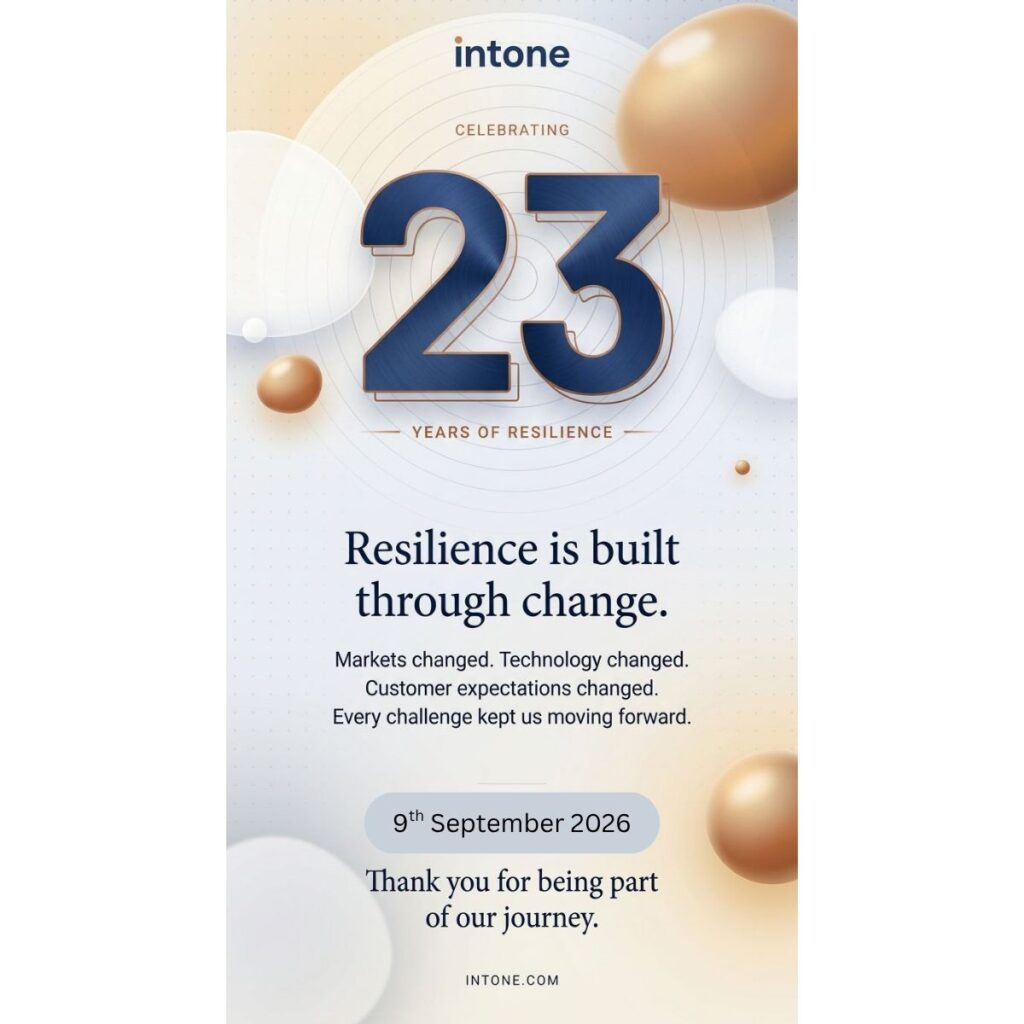
23 years is not a celebration of age. It's a celebration of resilience. Markets changed. Technology changed. Customer expectations changed. And that's exactly what kept us moving. As…
23 years is not a celebration of age. It's a celebration of resilience.
Markets changed. Technology changed. Customer expectations changed.
And that's exactly what kept us moving.
As Intone marks 23 years on September 9, stepping into the 24th year, we're grateful for every challenge that pushed us to innovate, every client who trusted us, and every team member who helped shape our journey.
If your company had to be described by one value that helped it thrive for 23 years, what would it be?
Let's hear it in the comments.
hashtag
#Intone #23Years #Innovation #Resilience #DigitalTransformation #TechnologyLeadership #LegacyModernization #ITStaffing #GRCMonitoring
Scale with Confidence
IntoneCCM is audited and certified by industry-leading third-party standards.