Continuous Controls Monitoring (CCM) is an automated technology approach that continuously checks and evaluates an organization’s internal controls, security settings, and compliance processes across enterprise systems. Unlike traditional, point-in-time audits that rely on small data samples, Continuous Controls Monitoring automatically ingests data from business systems in real time. It provides 100% coverage across all transactions and system configurations, automatically detecting risk exceptions, compliance gaps, and unauthorized changes as soon as they occur. Achieve 100% continuous compliance coverage. This transforms compliance from a manual, once-a-year scramble into an automated, proactive posture.
Why Continuous Controls Monitoring Matters for Enterprise Leaders
For technology and compliance executives—such as Chief Information Officers (CIOs), Chief Technology Officers (CTOs), and Chief Audit Executives (CAEs)—managing governance, risk, and compliance using manual methods has become unsustainable. Tired of manual enterprise audits? Enterprise applications generate thousands of digital interactions every single minute.
Here is why shifting to continuous monitoring is critical for modern enterprises:
- Eliminating Audit Blind Spots: Traditional sample testing evaluates only 1% to 5% of financial or system transactions. If an unauthorized privilege escalation or non-compliant transaction occurs outside that small sample, it goes completely unnoticed until a major breach or financial restatement happens. CCM tests 100% of your data population continuously.
- Ending “Audit Fatigue”: Internal audit, security, and IT engineering teams often spend up to 70% of their audit preparation time on administrative tasks—chasing control owners via email, gathering screenshots, and managing static spreadsheets. EagleEye365® automates control testing across 100% of data to ensure audit readiness. Continuous monitoring automates audit evidence collection directly at the source, saving hundreds of hours.
- Faster Remediation Times: When control failures occur in a traditional audit setup, teams usually discover them months after the event. With continuous alerts, real-time risk management teams are notified instantly, allowing issues to be resolved in hours rather than months.
- Harmonizing Complex Regulations: Leading enterprise research from organizations like Gartner highlights how modern risk management technologies allow organizations to map individual controls against multiple regulatory frameworks. Continuous Controls Monitoring enables teams to satisfy requirements for Sarbanes-Oxley (SOX), NIST, ISO 27001, HIPAA, and GDPR simultaneously without duplicating testing effort.
How Continuous Controls Monitoring Works: A 4-Step Process
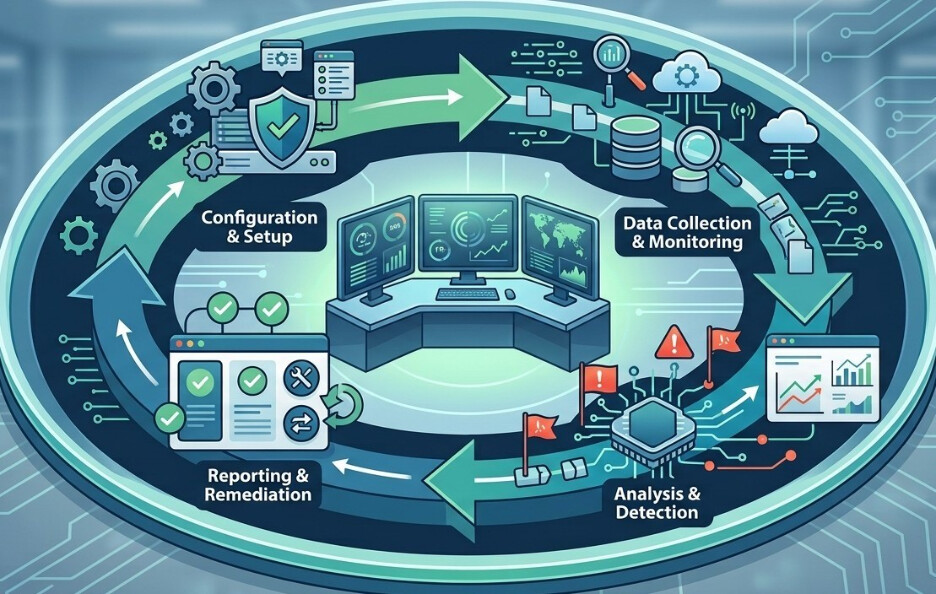
Connect 600+ Systems ───► Monitor 100% Data ───► Alert & Automate ───► Validate Audit Trails
Implementing Continuous Controls Monitoring does not require ripping and replacing existing enterprise software. Platforms like EagleEye365® by Intone work as an automated intelligence layer on top of your technology stack through four core steps:
- Automated System Integration: The CCM platform connects directly to enterprise software—including ERPs (SAP, Oracle, Dynamics 365), HR software, identity providers (Azure AD, Okta), and cloud infrastructure—using prebuilt API connectors. This creates a secure, direct line of sight into system logs and configuration data without heavy custom coding.
- Full-Population Rule Engine Execution: Instead of waiting for an auditor to request sample files, automated engines continuously test 100% of available data populations against set governance rules. These automated control testing engines continuously check segregation of duties (SoD), access permissions, system backup completions, and financial journal entries.
- Real-Time Exception Alerting & Remediation: When an anomaly or policy violation is detected—such as a user gaining unauthorized administrative access or a skipped change-approval workflow—the system triggers an instant alert. The exception is automatically routed to the responsible owner for immediate remediation, complete with clear tracking context.
- Continuous Evidence Capture & Audit Readiness: Every test execution, change event, and remediation action is recorded with full versioning and system-generated audit trails. When external auditors arrive, evidence is already validated and accessible in a centralized hub, keeping the organization permanently audit-ready.
FAQ’s
Traditional GRC automation tools act primarily as manual document repositories where teams record policies, track risks, and upload evidence attachments periodically. In contrast, Continuous Controls Monitoring automatically connects directly to your business applications, pulling live data continuously to run automated tests across 100% of your transactions without manual data entry.
Manual evidence collection requires control owners to gather information from multiple systems, verify its accuracy, and submit it to auditors. This process consumes significant time, increases the risk of errors, and can delay audit activities.
No. Modern cloud-native platforms like EagleEye365® utilize over 600 prebuilt connectors and no-code drag-and-drop workflow builders. This allows risk and compliance professionals to create and manage control tests independently without clogging internal IT queues.
While legacy compliance implementations often take six months to a year, modular platforms like EagleEye365® feature preconfigured regulatory templates and automated integration pathways, enabling organizations to deploy automated compliance and see live results within an average of 30 days.