GRC Advisory (Governance, Risk, and Compliance Advisory) is a specialized compliance consulting service that helps organizations design, optimize, and implement their risk management strategy and compliance processes. While GRC software automates the testing of controls, GRC Advisory provides the foundational blueprint. It involves expert consultants collaborating with technology and compliance leaders to assess current risk postures, identify regulatory gaps, harmonize overlapping frameworks (such as SOX, NIST, and GDPR), and create an actionable modernization roadmap. Align compliance with your business strategy. Ultimately, GRC Advisory aligns your compliance posture with overarching business objectives, ensuring technology investments solve real problems.
Why GRC Advisory Matters Before You Buy Technology
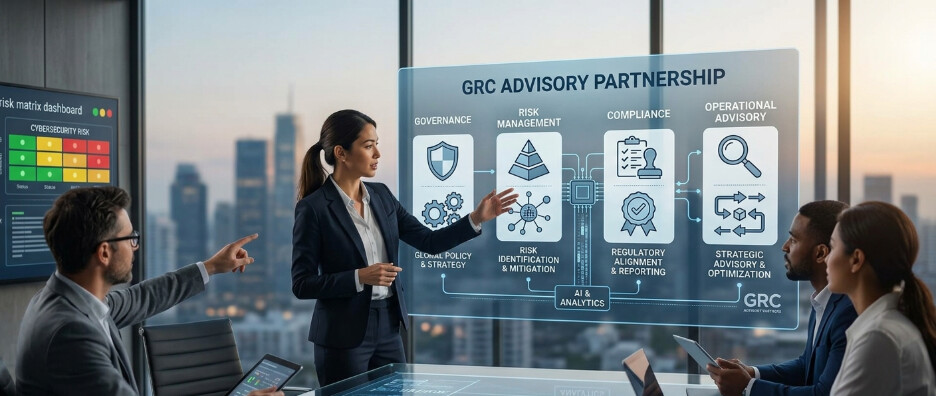
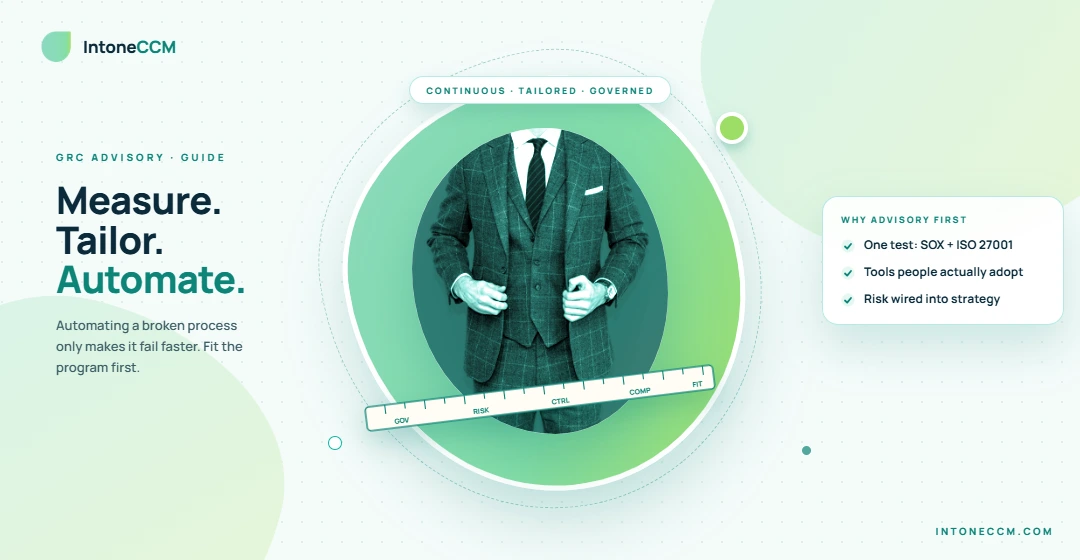
Many organizations make a critical mistake: they attempt to solve deep operational risk problems by simply purchasing new software. However, automating a broken or inefficient process only leads to faster inefficiencies. Is your compliance strategy ready?
For Chief Information Officers (CIOs), Chief Audit Executives (CAEs), and IT Directors, navigating the complexities of digital transformation requires a clear strategy.
Here is why engaging in Governance Risk and Compliance advisory is a necessary first step:
- Preventing Technology Implementation Failure: Without a clear understanding of your organization’s unique control environment, deploying a new GRC tool often results in low user adoption and wasted IT budget.
- Harmonizing Complex Regulations: Organizations rarely deal with just one regulation. GRC advisors help consolidate overlapping requirements—like testing an IT access control once to satisfy both SOX and ISO 27001—drastically reducing the internal workload through framework rationalization.
- Aligning IT with Business Goals: According to research by McKinsey & Company on risk transformation, successful risk management programs are those that integrate directly with enterprise strategy rather than operating in siloed IT departments. Advisory services bridge this gap.
GRC Advisory vs. Continuous Controls Monitoring (CCM)
A common point of confusion for executives evaluating risk solutions is understanding the difference between advisory services and monitoring software. GRC Advisory builds the blueprint to align risk management with your business goals.
Think of building a secure, automated enterprise like building a high-rise tower:
- GRC Advisory is the Architect (The Strategy): Before pouring any concrete, you need a blueprint. GRC Advisory is the planning phase. Advisors conduct gap analyses, design the control frameworks, rationalize risk registers, and determine exactly which systems need to be monitored. They answer the question: “What should our technology vision be?”
- Continuous Controls Monitoring is the Engine (The Execution): Once the blueprint is approved, you need a system to execute it daily. Platforms like Intone’s EagleEye365® represent the operational engine. CCM automatically ingests data, continuously tests 100% of your transactions against the framework designed by the advisors, and alerts your team to real-time anomalies.
Advisory vs. Monitoring at a Glance
| GRC Advisory (Strategy) | GRC Monitoring (Execution) |
| Gap Analysis & Risk Assessment | Automated Data Integration |
| Framework Rationalization | Real-Time Exception Alerts |
| Policy & Procedure Design | Continuous Evidence Capture |
| GRC Modernization Roadmap | Automated Compliance Dashboards |
How a GRC Advisory Engagement Works
A successful advisory partnership focuses on delivering clarity, actionable steps, and measurable ROI. Here is what the process typically looks like for enterprise teams:
- Step 1: Current State Assessment & Gap Analysis — Advisors start by mapping your existing compliance landscape. They review your current policies, evaluate how your teams currently gather evidence, and identify critical vulnerabilities or manual bottlenecks that are draining resources.
- Step 2: Framework Design & Controls Rationalization — Next, consultants design a unified framework. Instead of maintaining separate spreadsheets for every regulatory audit, advisors map a single set of baseline controls that satisfy multiple global standards simultaneously.
- Step 3: Technology Selection & Roadmap Development — Finally, advisors provide a clear, vendor-agnostic technology roadmap. They help IT Procurement and CIOs evaluate whether to build custom workflows or deploy specialized continuous monitoring platforms. This ensures that when you do invest in automation, you are solving the right problems with the right architecture.
FAQ’s
GRC Advisory is a human-led consulting service that focuses on strategy, framework design, and risk assessment. GRC software is the technology platform (like a Continuous Controls Monitoring system) used to execute, automate, and manage that strategy on a daily basis.
GRC Advisory is highly valuable for growing enterprises, organizations preparing for IPOs, companies facing new regulatory mandates, or leadership teams (CIOs, CISOs, CAEs) who are experiencing “audit fatigue” and want to modernize their manual compliance processes before purchasing new software.
The timeline depends heavily on the organization’s size and complexity. A targeted gap analysis or readiness assessment might take 3 to 6 weeks, while a comprehensive enterprise-wide risk transformation and framework redesign can span several months.
By collecting evidence directly from source systems, organizations can reduce repetitive manual work, improve evidence consistency, accelerate control testing, and provide auditors with timely access to reliable information.
Continuous monitoring helps organizations identify control exceptions in real time, maintain audit-ready evidence, reduce audit preparation effort, improve compliance visibility, and support stronger risk management practices.
Conclusion
Modernizing legacy systems and compliance programs is not simply a technology upgrade; it is a business transformation initiative that prepares organizations for future growth. Jumping straight into software deployment without a clear strategy often leads to costly missteps and operational friction.
By partnering with experienced GRC advisors, technology leaders can confidently chart a path forward—ensuring that their compliance frameworks are resilient, streamlined, and ready for automation.