
Not long ago, AI governance was mostly handled by compliance and IT teams. Change in the scenario: now, it has become a key issue for company leaders. The EU AI Act brings penalties of up to €35 million or 7% of global revenue and makes organizations directly responsible for high-risk AI. This means governance is now a leadership concern, not just a technical detail. However, as AI adoption accelerates, many companies are unprepared. Only 36% have a formal AI governance framework, showing a clear gap between what regulators expect and what companies are actually doing.
With regulations like the EU AI Act tying real financial penalties and accountability to how AI systems are designed and deployed, AI risk has become a board‑level conversation.
From Compliance Activity to Leadership Discipline
The changes go beyond new regulations. The nature of AI itself is evolving. AI systems are no longer limited to back-office tasks or small pilot projects. Today, they affect credit decisions, hiring, public services, healthcare, and customer trust on a large scale. As these systems start to shape real-world outcomes, governance must become a central concern.
This is why leading organizations are rethinking AI governance not as a compliance function, but as a core management discipline, one that demands leadership attention, clear accountability, and cross‑functional ownership.
The Shift to Embedded Governance (“Governance Where Work Happens”)
Traditional governance models were designed for static systems and predictable risk. AI doesn’t work that way. Models learn, data evolves, and risk profiles shift over time. As a result, retrospective controls and end‑stage reviews fall short.
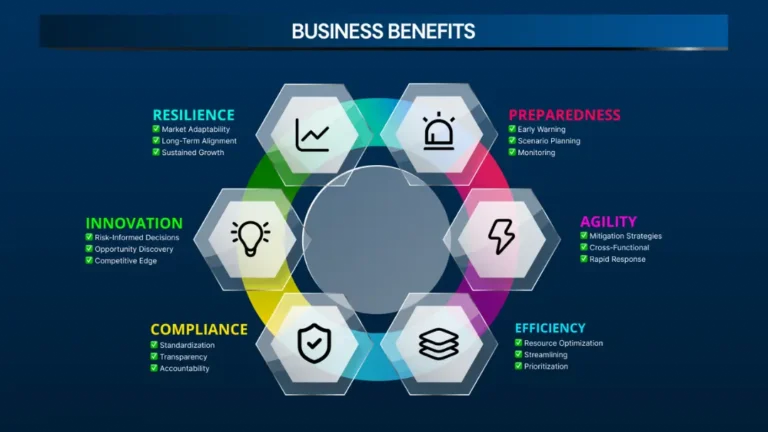
Forward-thinking organizations are now using embedded governance. They build regulatory, ethical, and quality controls right into the AI process. This approach includes:
- Risk classification at the use‑case level, not retrospectively
- Data quality, bias checks, and documentation integrated into development workflows
- Ongoing monitoring, not one‑time sign‑offs
When governance is built in, it becomes a natural part of how AI is developed and expanded. Teams no longer have to rush to meet regulations at the last minute.
Risk-Based Thinking Enables Smarter Decisions
Under the EU AI Act’s risk-based framework, AI systems must be classified by risk level (e.g., prohibited/unacceptable, high-risk, limited-risk, minimal-risk). Your classification determines the obligations that follow.
This is where many programs fail. The problem is not the model itself, but rather that classification is treated as a one-time label rather than a living control decision.
A better way is to classify risks for each use case, not just for AI in general.
- What decision does the system influence?
- Who is impacted?
- What’s the harm profile if it fails, drifts, or discriminates?
Proportional governance focuses rigor where risk and impact are highest, removes friction for low‑risk innovation, and consciously balances speed, scale, and control, turning governance into a source of strategic clarity, not an innovation blocker.
High-Risk AI Demands Executive Ownership
For high-risk AI applications, regulatory expectations are clear: evidence, documentation, traceability, and accountability are mandatory. But beyond compliance, these requirements surface a fundamental question for leadership:
Who ultimately owns AI outcomes in the organization?
The business executive who authorizes the AI use case owns its outcomes. Accountability cannot be delegated to models or technical teams; it rests with leadership that defines the decision, accepts the risk, and controls deployment when systems fail, drift, or cause harm.
What Boards Should Ask (and What Good Teams Can Answer)
As AI becomes board-visible, leadership questions will change from “Are we using AI responsibly?” to:
- Which AI systems are high-risk in our business and why?
- Where does governance live in the lifecycle (not in policy docs)?
- Can we produce conformity evidence quickly and consistently?
- What happens when the model drifts or fails—who owns the response?
If teams cannot answer these questions clearly and in a structured way, governance is not yet a discipline. It is still just an aspiration.
Where Intone Can Help You Lead: Governance That Enables Execution
This is where Intone can help you stand out
Many firms offer “AI governance frameworks.” Few can actually put them into practice across real enterprise settings, including legacy systems, complex data, multiple business units, and constrained deadlines.
IntoneCCM’s execution-led advantage is in turning governance into:
- repeatable operating models
- embedded lifecycle controls
- audit-ready evidence flows
- continuous monitoring and oversight
This connects directly to the modern enterprise reality: governance must work at scale and must survive contact with delivery.
Closing: The Winning Programs Don’t “Do Governance.” They “Run Governance.”
The organizations that thrive in the era of the EU AI Act won’t be the ones with the most policies.
They’ll be the ones who treat AI governance like:
- Internal controls (structured evidence)
- Cybersecurity (continuous oversight)
- Enterprise risk (board visibility and accountability)
In practice, this means operating governance through an AI control plane: a living view of systems and use cases, embedded lifecycle controls, and continuous monitoring that shifts governance from static documentation to ongoing assurance.
Because AI is no longer just software. It’s decision infrastructure. The decision infrastructure must be governed as a discipline.
It means running governance as an operating model with ownership, controls, and monitoring, not treating it as a one‑time compliance task.
The Act introduces direct financial penalties and accountability, making AI risk a board‑level leadership responsibility.
The business executive who approves the use case owns the outcome, not the model or technical teams.
EagleEye365® provides a live inventory, embedded controls, evidence generation, and continuous monitoring across AI systems.
IntoneCCM focuses on execution, embedding governance into real delivery workflows, not just providing static frameworks.